

Flux might look like a small part of the soldering process but it’s the difference between a reliable product and a failed one.
If you’ve ever wondered what does flux do in soldering, the answer is simple: it prepares the surface, improves solder flow, and ensures strong, long-lasting connections in PCB assembly.
What Does Flux Do in Soldering?
Flux in soldering is a chemical agent that prepares metal surfaces so solder can properly bond. Without it, solder simply won’t stick the way it should.
Here’s what flux actually does:
- Removes oxidation from metal surfaces
- Improves solder wetting (helps solder spread evenly)
- Prevents re-oxidation during heating
- Strengthens solder joints for long-term reliability
In short, the role of flux in soldering is to create the perfect conditions for a clean, strong, and conductive connection.
Why Flux Is Essential in Soldering?
Let’s make this practical.
Without flux:
- Solder beads up instead of flowing
- Joints become weak and unreliable
- Electrical connections fail over time
With proper flux in soldering:
- You get smooth, shiny joints
- Electrical conductivity improves
- Product reliability increases significantly
In modern electronics, especially what is flux in PCB assembly, this becomes even more critical. High-density boards and miniaturized components leave zero room for poor soldering.
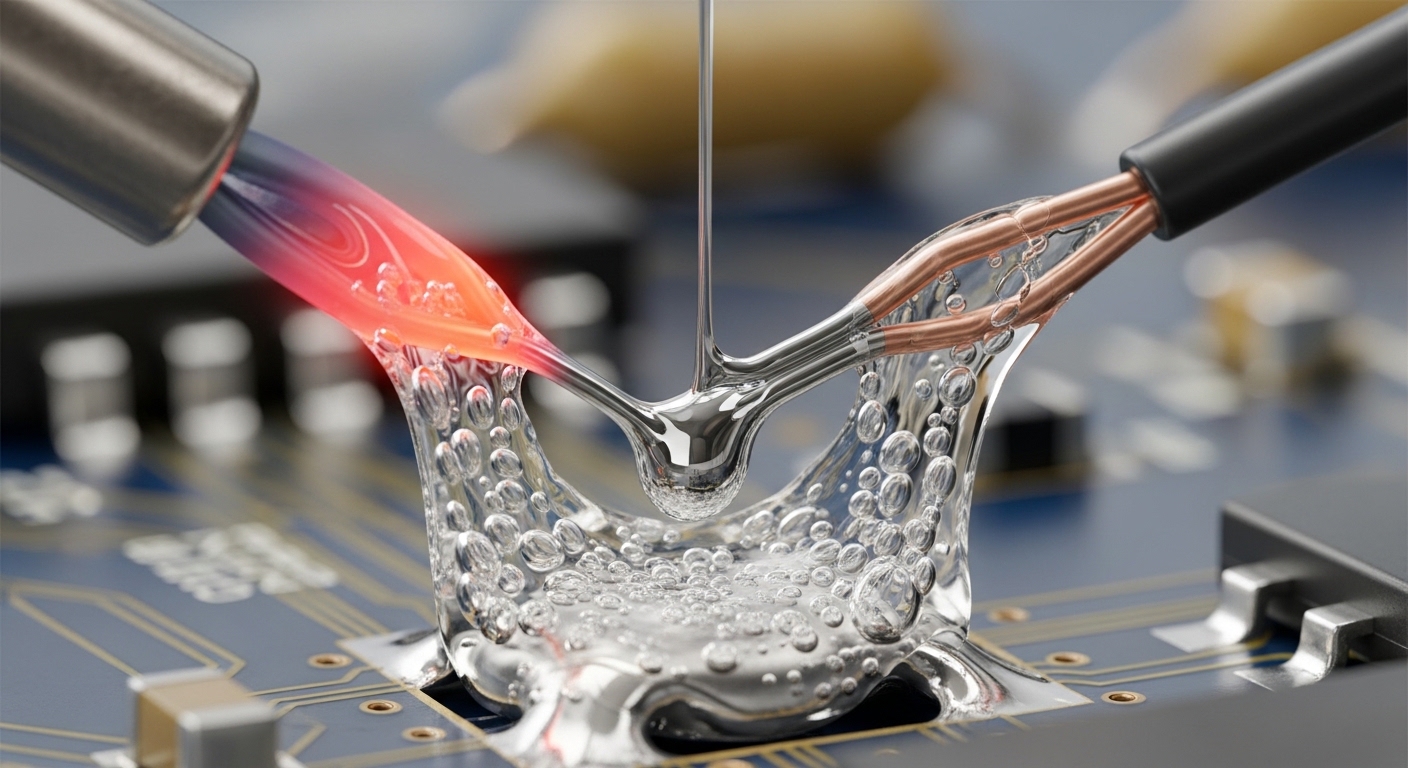
How Flux Works (Simple Breakdown)?
You don’t need a chemistry degree to understand this. Think of flux as a “surface cleaner + protector.”
Step 1 – Removing Oxides:
Metals naturally form oxidation layers when exposed to air. Flux breaks down these layers so solder can bond directly to clean metal.
Step 2 – Improving Wetting:
Flux allows molten solder to spread smoothly across pads and component leads instead of forming blobs.
Step 3 – Protecting the Surface:
During heating, flux creates a barrier that prevents oxygen from interfering with the soldering process.
That’s why understanding what does flux do in soldering is key—it’s not optional, it’s foundational.
Types of Flux Used in Soldering:
Different applications require different types of flux. Choosing the right one directly impacts quality.
Rosin Flux:
- Traditional and widely used
- Strong cleaning ability
- Requires cleaning after soldering
Water-Soluble Flux:
- Highly active and effective
- Ideal for complex assemblies
- Must be cleaned thoroughly
No-Clean Flux:
- Leaves minimal residue
- Common in modern PCB manufacturing
- Reduces post-processing steps
Each type plays a different role of flux in soldering, depending on the application and reliability requirements.
Flux in PCB Assembly vs Manual Soldering:
The role of flux changes depending on how soldering is performed.
In PCB Assembly (SMT & Automated Processes):
- Applied through controlled systems (spray, stencil, paste)
- Critical for consistent, repeatable results
- Used in reflow and wave soldering
In Manual Soldering:
- Applied directly via flux pens or core solder wire
- More dependent on operator skill
If you want to understand how flux behaves in automated environments, this detailed guide on reflow soldering processes explains how heat profiles and flux work together:
What Happens Without Proper Flux?
This is where problems begin.
Without proper flux in soldering, you’ll see:
- Cold solder joints
- Poor wetting
- Solder bridging
- Increased defect rates
These defects don’t just affect appearance they impact performance and reliability.
A deeper look at common manufacturing issues is covered here:
Effects of Too Much vs Too Little Flux:
Flux is powerful but only when used correctly.
Too Little Flux:
- Incomplete oxide removal
- Weak solder joints
- Poor wetting
Too Much Flux:
- Excess residue
- Potential contamination
- Cleaning challenges
This balance is critical in manufacturing environments.
If you want a deeper technical breakdown, this guide explains how incorrect flux volume directly impacts soldering quality
Flux Residue – Is It a Problem?
A common question in PCB manufacturing.
- No-clean flux leaves minimal residue, but not always zero risk
- Residue can affect high-reliability applications (medical, aerospace)
- Cleaning may still be required depending on standards
So while flux helps during soldering, managing its residue is equally important.
Why Flux Matters in Modern Electronics Manufacturing?
Today’s electronics are:
- Smaller
- Faster
- More complex
That means there’s no room for weak solder joints.
The role of flux in soldering becomes even more critical in:
- High-density PCB designs
- Lead-free soldering processes
- Advanced manufacturing environments
Flux directly impacts:
- Product lifespan
- Electrical performance
- Failure rates
In short, it’s a key factor in electronics manufacturing reliability.
How Cygnus Electronics Ensures Soldering Quality?
When it comes to consistent, high-quality PCB assembly, flux control isn’t guesswork it’s a science.
At Cygnus Electronics:
- Flux application is precisely controlled
- Advanced SMT and reflow processes ensure consistency
- Inspection methods like AOI and X-ray verify joint quality
- Every step is optimized for long-term reliability
If you’re developing electronic products and need dependable PCB assembly with strict process control, connect with Cygnus Electronics to ensure your products perform reliably from prototype to production.
FAQs
What does flux do in soldering?
Flux removes oxidation, improves solder flow, and helps create strong, reliable electrical connections.
Why is flux important in PCB assembly?
In PCB assembly, flux ensures proper bonding between components and pads, reducing defects and improving reliability.
Can soldering be done without flux?
Yes, but the results are usually poor weak joints, bad conductivity, and higher failure rates.
What happens if too much flux is used?
Excess flux can leave residue, cause contamination, and require additional cleaning processes.